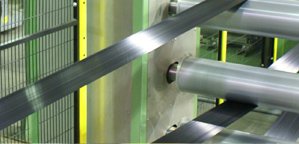
Geotextile for Landscape Design
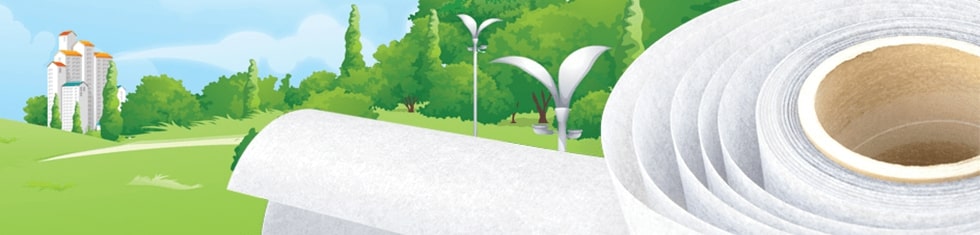
Geotextile Range
Price list of 30.03.2026
| Name | Density, g/m2 |
Rupture strength, along length/ along width kN/m |
Elongation at rupture not more than, % |
Thickness at load of 2 kPa, +/- 0.5 mm |
Roll length, m (roll width of) |
Price in UAH, m2 with VAT |
| Heat-treated (calendered) geotextiles - stamp production technology (roll width 1,0; 1,5; 2,0; 3,0 m) | ||||||
| Runo К 100 | 100 | 2,8/2,8 | 25-80/35-90 | 0,5 | from 100 | 22,50 |
| Runo К 150 | 150 | 4,0/3,8 | 25-80/35-90 | 0,7 | from 100 | 29,28 |
| Runo К 200 | 200 | 5,4/6,0 | 25-80/35-90 | 1,0 | from 100 | 37,68 |
| Runo К 250 | 250 | 7,2/9,1 | 25-80/35-90 | 1,5 | from 100 | 44,70 |
| Runo К 300 | 300 | 8,6/10,9 | 25-80/35-90 | 2,0 | from 100 | 52,62 |
| Heat-treated (chemically bonded) geotextiles - staple production technology (roll width 1,0; 1,5; 2,0; 3,0 m) | ||||||
| Runo Р 100 | 100 | 6,5/3,8 | 25-80/35-90 | 0,5 | from 100 | 25,86 |
| Runo Р 150 | 150 | 9,0/3,8 | 25-80/35-90 | 0,7 | from 100 | 33,33 |
| Runo Р 200 | 200 | 12,0/7,4 | 25-80/35-90 | 1,0 | from 100 | 43,32 |
| Runo Р 250 | 250 | 14,0/9,6 | 25-80/35-90 | 1,5 | from 100 | 55,20 |
| Runo Р 300 | 300 | 15,0/10,9 | 25-80/35-90 | 2,0 | from 100 | 63,60 |
| Heat-treated geotextile - spunbond production technology (roll width 1,0; 1,5; 3,0 m) |
||||||
| Runo S 100 | 100 | 4,0/3,0 | 50/50 | 0,7 | from 100 | 22,50 |
| Runo S 150 | 150 | 5,5/4,5 | 50/50 | 0,95 | from 100 | 29,28 |
| Runo S 200 | 200 | 9,5/7,5 | 50/50 | 1,2 | from 100 | 37,68 |
| Runo S 250 | 250 | 11,0/9,0 | 50/50 | 1,5 | from 100 | 47,70 |
| Runo S 300 | 300 | 13,0/12,0 | 50/50 | 2,0 | from 100 | 52,62 |
| Geotextiles are heat-treated, chemically bonded - spunbond production technology (roll width 1,0; 1,5; 3,0 m) |
||||||
| Runo SP 100 | 100 | 5,0/3,0 | 22/24 | 0,7 | from 100 | 25,86 |
| Runo SP 150 | 150 | 8,8/6,6 | 23/24 | 1,0 | from 100 | 33,33 |
| Runo SP 200 | 200 | 12,4/9,8 | 24/25 | 1,2 | from 100 | 43,32 |
| Runo SP 250 | 250 | 14,0/12,0 | 30/30 | 1,4 | from 100 | 55,20 |
| Runo SP 300 | 300 | 16,0/14,0 | 30/30 | 1,6 | from 100 | 63,60 |
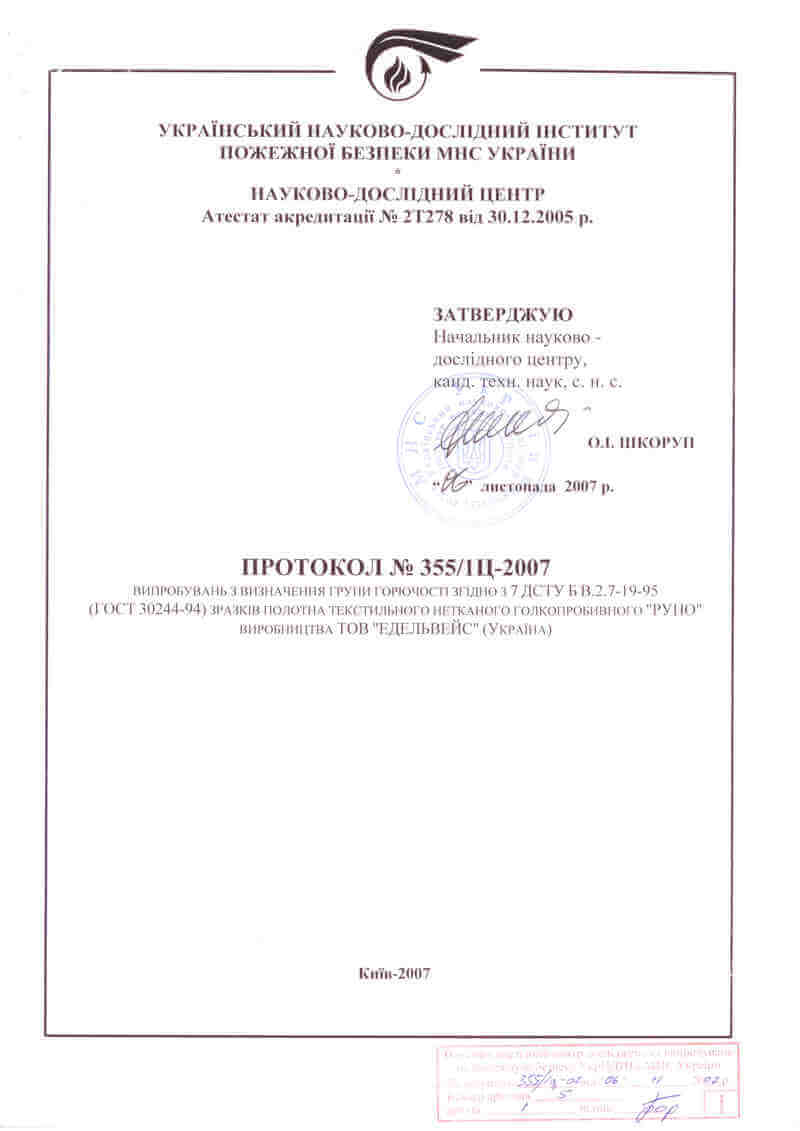
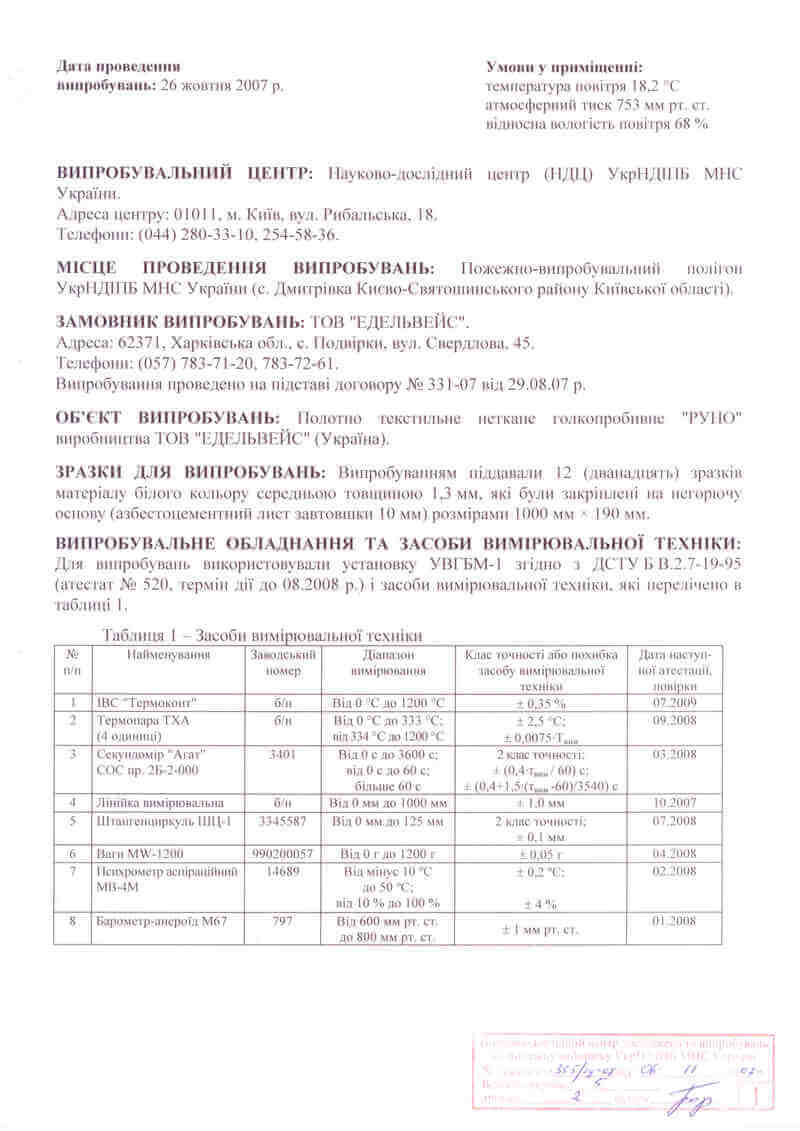
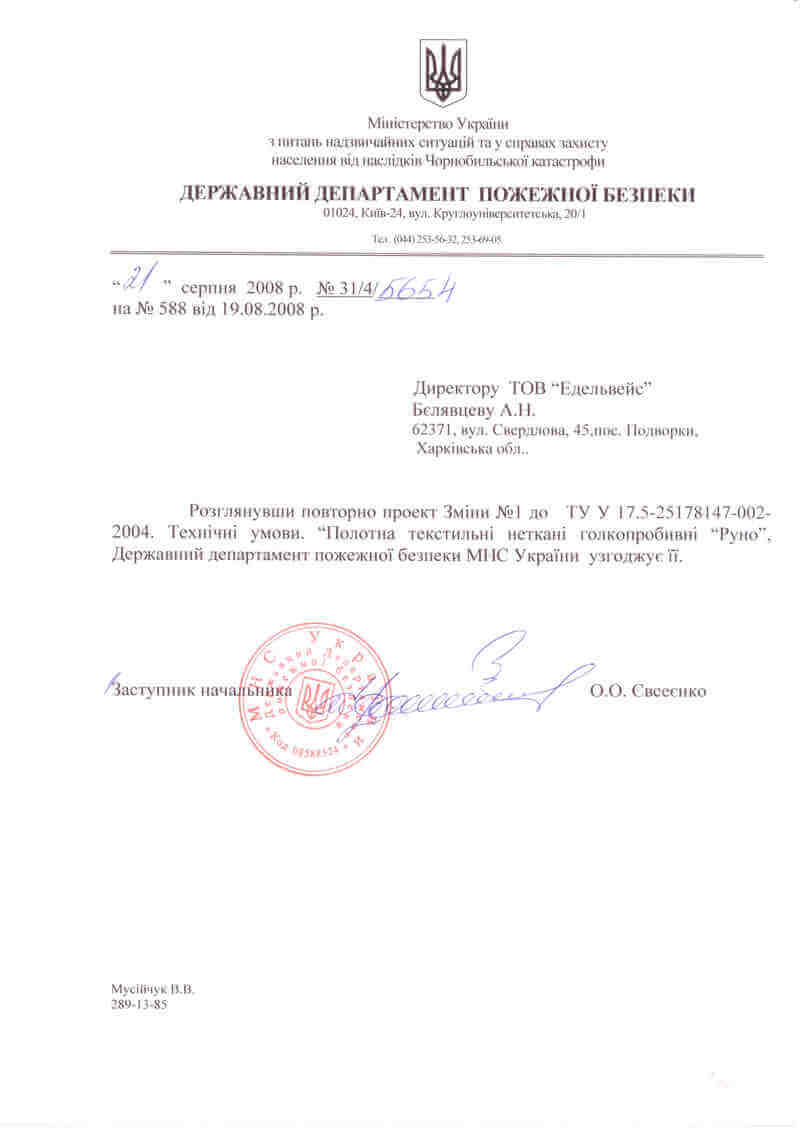
Certificates for geotextiles
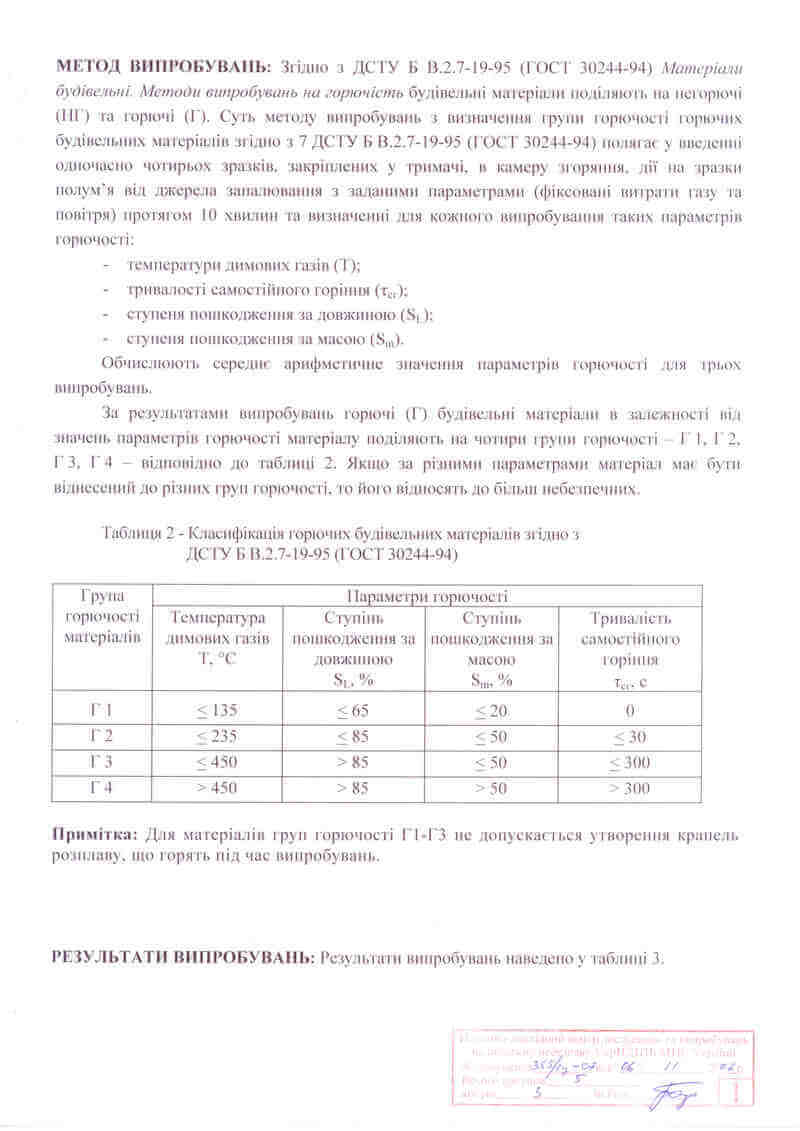
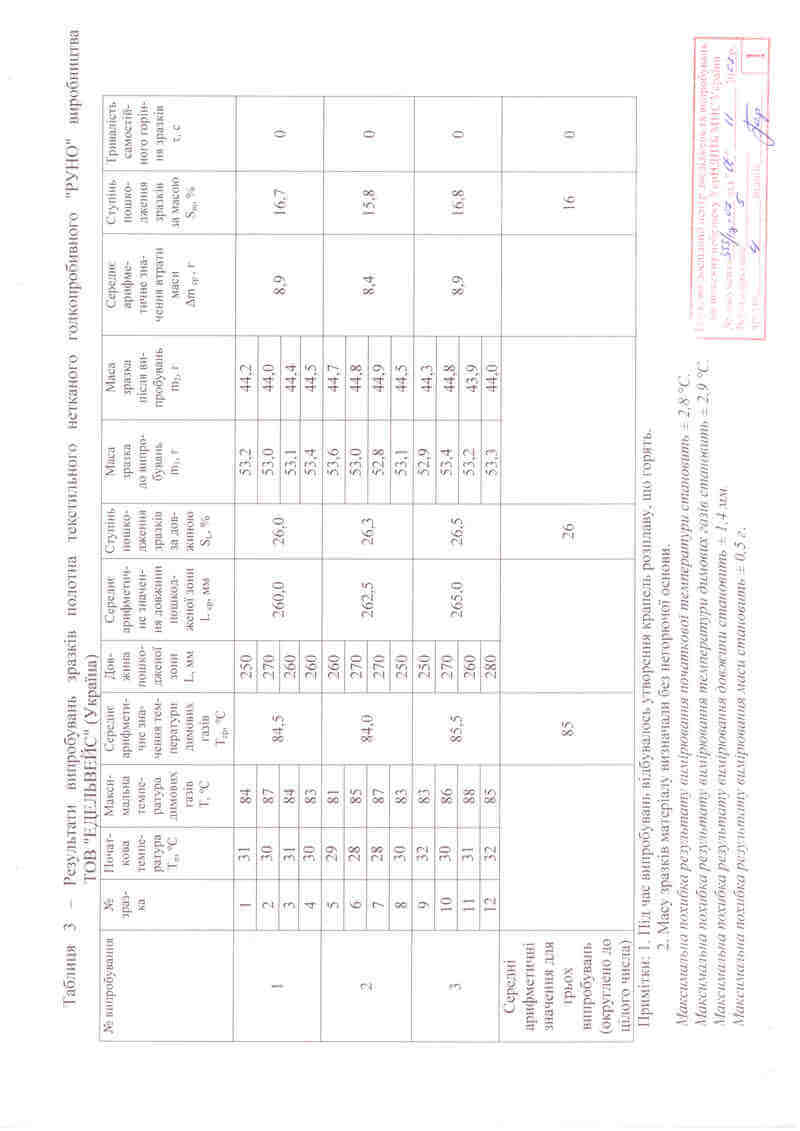
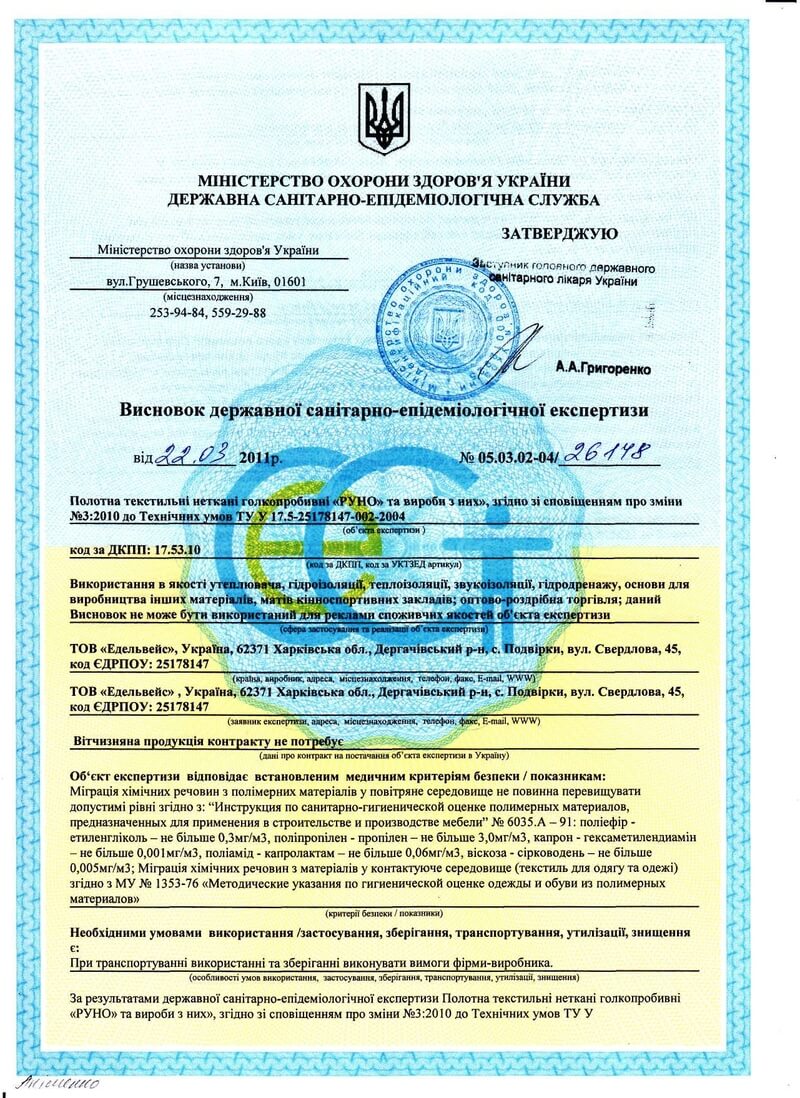
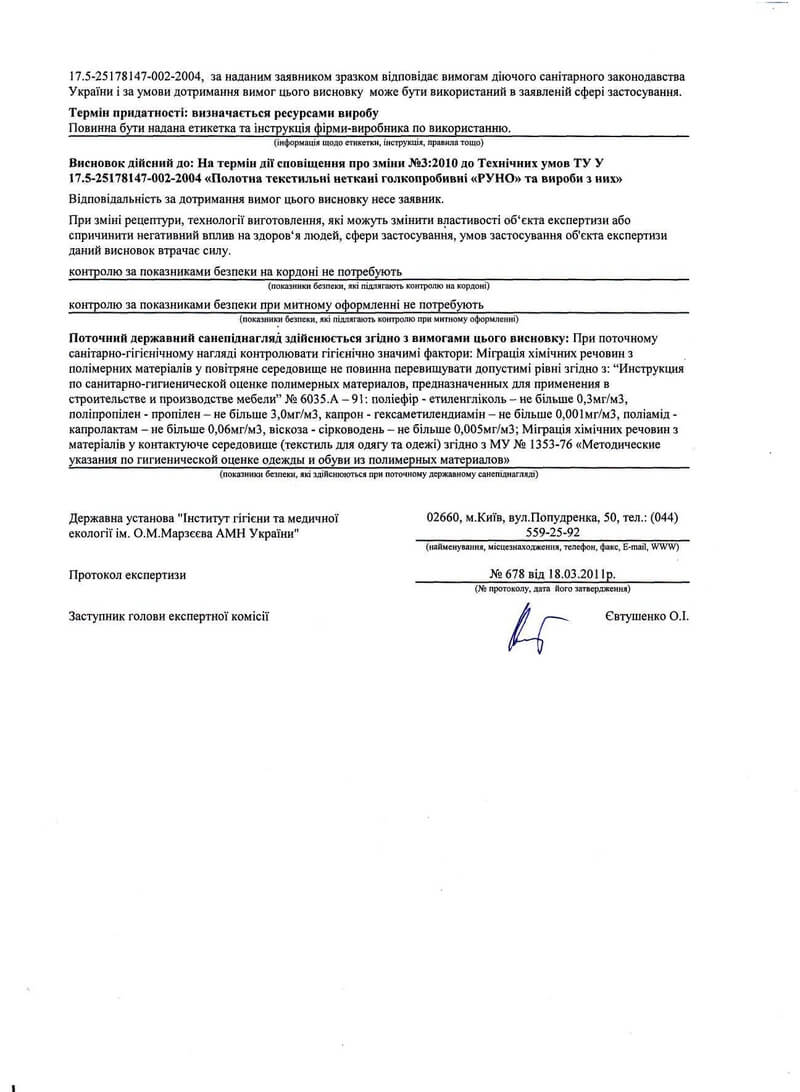

Landscape geotextile is a synthetic material designed to protect exterior design elements in private, urban, or park areas against erosion caused by groundwater and surface runoff, and to solve other tasks related to shaping the terrain and preserving the original appearance of alpine gardens, lawns, flowerbeds, pools, ponds, and fountains. In Ukraine, geotextile for flowerbeds can be purchased directly from the manufacturer, Flexx.
What is landscape geotextile?
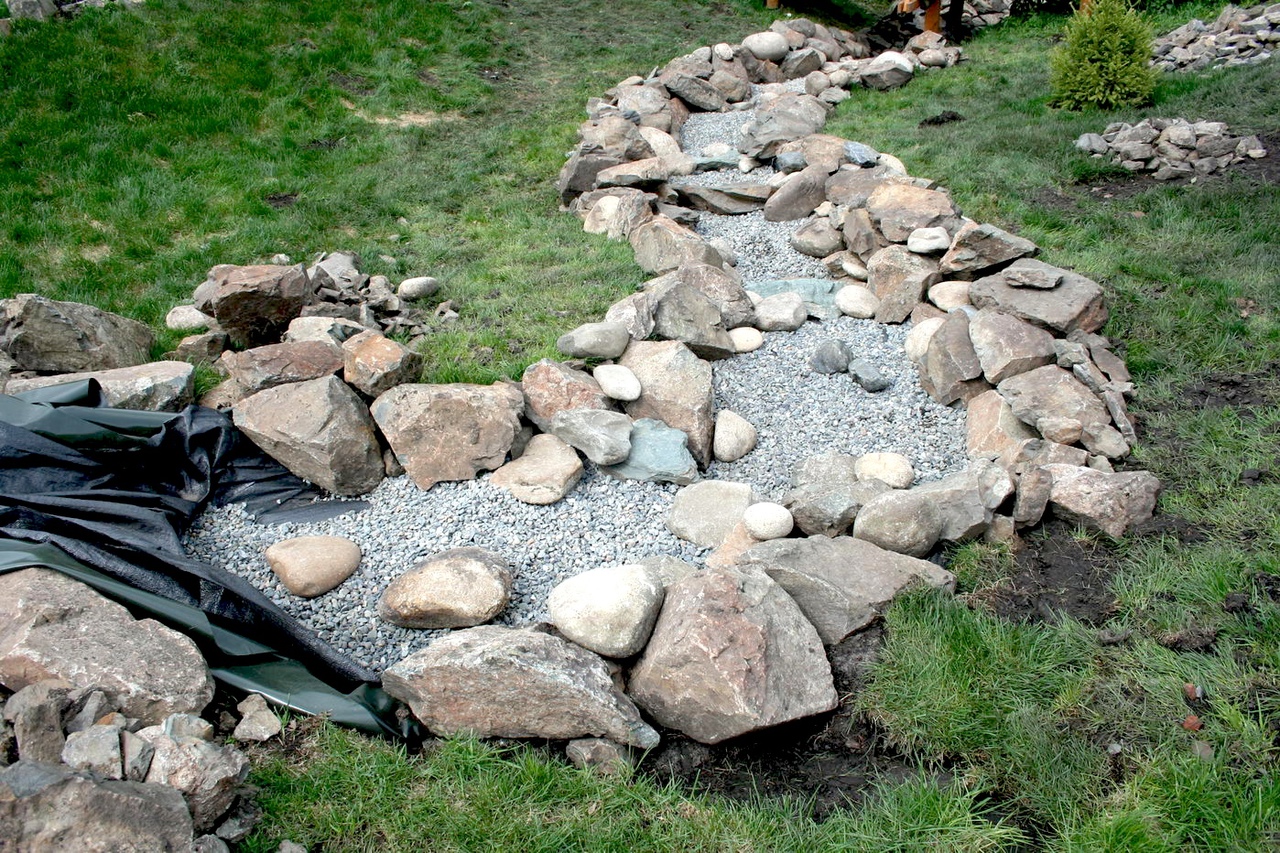
For landscaping purposes, nonwoven calendered geotextile is commonly used. It is made from polyester and other polymer fibers using a needle-punched method. It can be treated with special chemical compositions to achieve the specific properties.
Fabrics without chemical impregnation offer the following benefits:
- Good tensile strength.
- Water permeability while retaining soil fines.
- Inertness to aggressive environments – resistance to weak acids, alkalis, oils, and other chemically active substances.
- Mildew, mould, and other microflora resistance; rot-proof performance.
Chemically impregnated geotextile is stiffer and more durable, while still retaining filtration properties. It is used in cases when increased resistance to external impacts is required.
The material is supplied in rolls for convenient storage, transportation, and installation.
Geotextile for flowerbeds specifications
To arrange flowerbeds, lawns, and other landscape elements, Flexx offers geotextile fabrics with the following parameters:
- Width: 3.0 and 1.0 m (1.5 m available on request).
- Roll length: 100, 150, 200, 250, and 300 m.
- Density: 100, 150, 200, 250, and 300 g/m².
- Tensile strength (longitudinal/transverse):
- Runo K (calendered geotextile without impregnation) – from 2.8/2.8 to 8.6/10.1 kN/m.
- Runo P (impregnated geotextile) – from 4.5/3.0 to 15.0/10.4 kN/m.
- Thickness at 2 kPa load: from 0.4 to 2.4 mm.
- Relative elongation (longitudinal/transverse), %, not less than:
- Runo K – 30/50, 40/60, and 50/65.
- Runo P – 20/28, 22/30, 22/35, 23/36, and 24/36.
- Operating temperature range: –50... +200 оС.
Tasks solved by geotextile for landscaping
Geotextile is widely used in landscaping to solve such important tasks as:
- Separates poor subsoil from imported fertile topsoil, preventing mixing and ensuring healthy plant growth..
- Drains excess stormwater and groundwater into drainage systems, preventing ponding, silting, and distortion of design elements on weak soils.
- Prevention of washout (erosion) and desiccation of fertile soil.
- Drainage structures protection from clogging.
- Suppression of weed growth and limitation of tree root spread near decorative plantings, flowerbeds, and lawns.
- Protection against mechanical damage to the geomembrane, providing waterproofing for pools, ponds, canals, and other artificial water bodies.
- Reshaping the relief and strengthening slopes.
Additionally, landscape geotextile is used to restrict the growth of certain ornamentals, separate soil from decorative aggregates (such as stones, coloured mulch, pebbles, or marble chips) to maintain a neat appearance, and to construct paths and pavements.
How to choose geotextile for landscape design?
When selecting geotextiles for landscape design, consider:
- Type of material. Needle-punched geotextile provides good filtration and water permeability, and is generally preferred. This is precisely the material offered for sale by Flexx. From our product range, we recommend choosing:
- Runo P – is a chemically impregnated geotextile with higher stiffness for protecting the waterproofing of water ponds. It is also suitable for alpine slides and rock gardens where the soil layer must be separated from decorative fill.
- Runo K fabric without impregnation is for laying out flowerbeds or lawns, and other landscape elements that require higher water permeability.
- Density. In zones with low loads, such as pond slopes or flowerbeds, a less dense (100-150 g/m²) geotextile fabric is suitable; for pavements and garden paths, you can use 150-200 g/m²; for paved driveways and high-load areas – 250–300 g/m².
Geotextile installation on flowerbeds
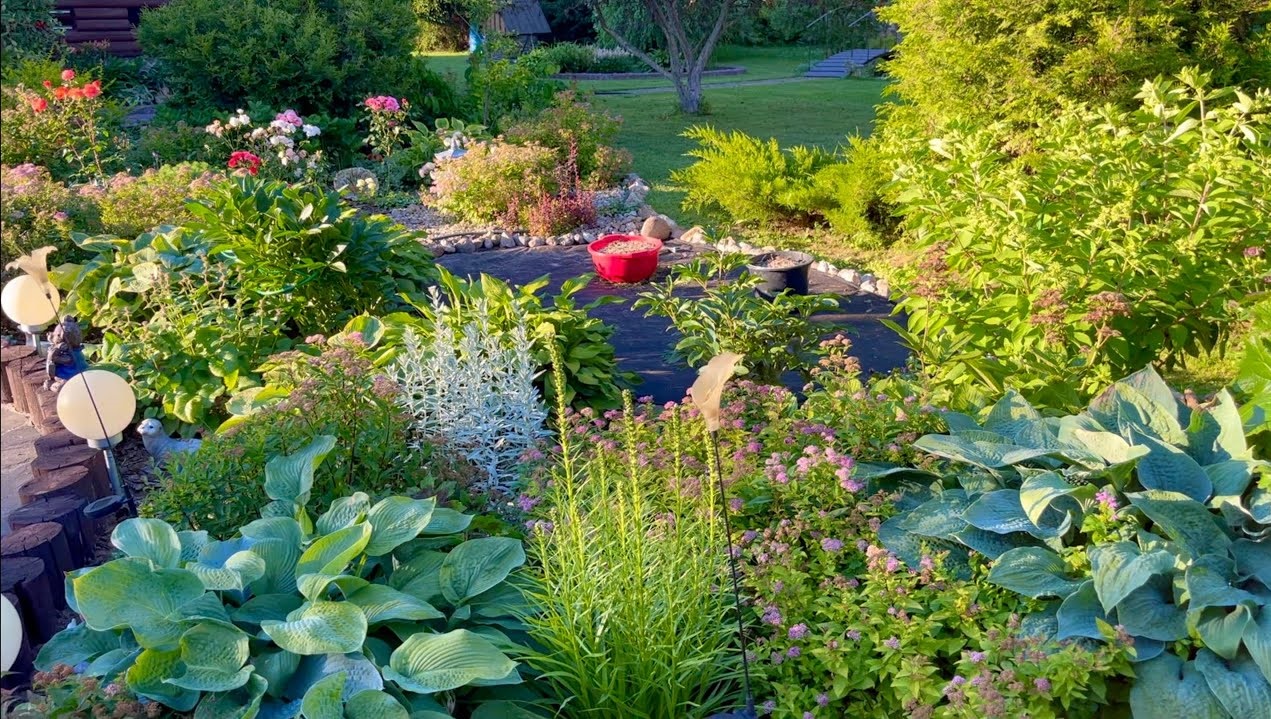
The application technology of geotextile fabric on a flowerbed involves the following steps:
- Prepare the site for the flowerbed – remove all debris from the designated area and mow weeds.
- Strip the topsoil at the flowerbed location. Carefully level the soil beneath the fertile layer, remove stones and bumps, and fill any depressions.
- Lay the geotextile – unroll it over the surface of the excavation bottom, joining sheets with staples or by heating using a torch with 150–200 mm overlaps. Smooth it evenly to avoid wrinkles.
- Place the soil layer on top. If the removed soil is not fertile enough, it should be replaced. When laying the soil layer, make sure that it is free of debris or large stones.
- Plant pre-grown seedlings of flowering plants. If sowing flower or grass seeds, cover with spunbond until emergence.
Alternatively, instead of fertile soil, you can backfill the geotextile with sand and gravel, install a polycarbonate flowerbed frame, fill it with fertile soil, and plant flowers.
Why buy geotextile for flowerbeds by Flexx?
If you need geotextile for flowerbeds and other landscaping elements, you can order it from our company. The main advantages of this solution are:
- A broad range in the Flexx catalogue suited to any design task.
- High-quality geotextiles in line with international standards; tested materials fully meet stated characteristics.
- The opportunity to buy landscape geotextile at direct-from-manufacturer prices, eliminating intermediary fees.
- Advisory support by experienced experts who will help you choose the right material for your specific tasks.
- Fast order processing and timely dispatch.
- Convenient payment options for purchasing geotextile.
- Official manufacturer’s warranty.
To order geotextile for flowerbeds, contact our managers via the phone numbers listed in the site header, or request a callback by clicking the “Contact us” button.